Curated Guide
The Best Interior Design Magazines for Luxury Inspiration
A hand-picked list of the interior design magazines that architects, interior designers, and CGI studios return to when they need to understand where luxury taste is heading next.
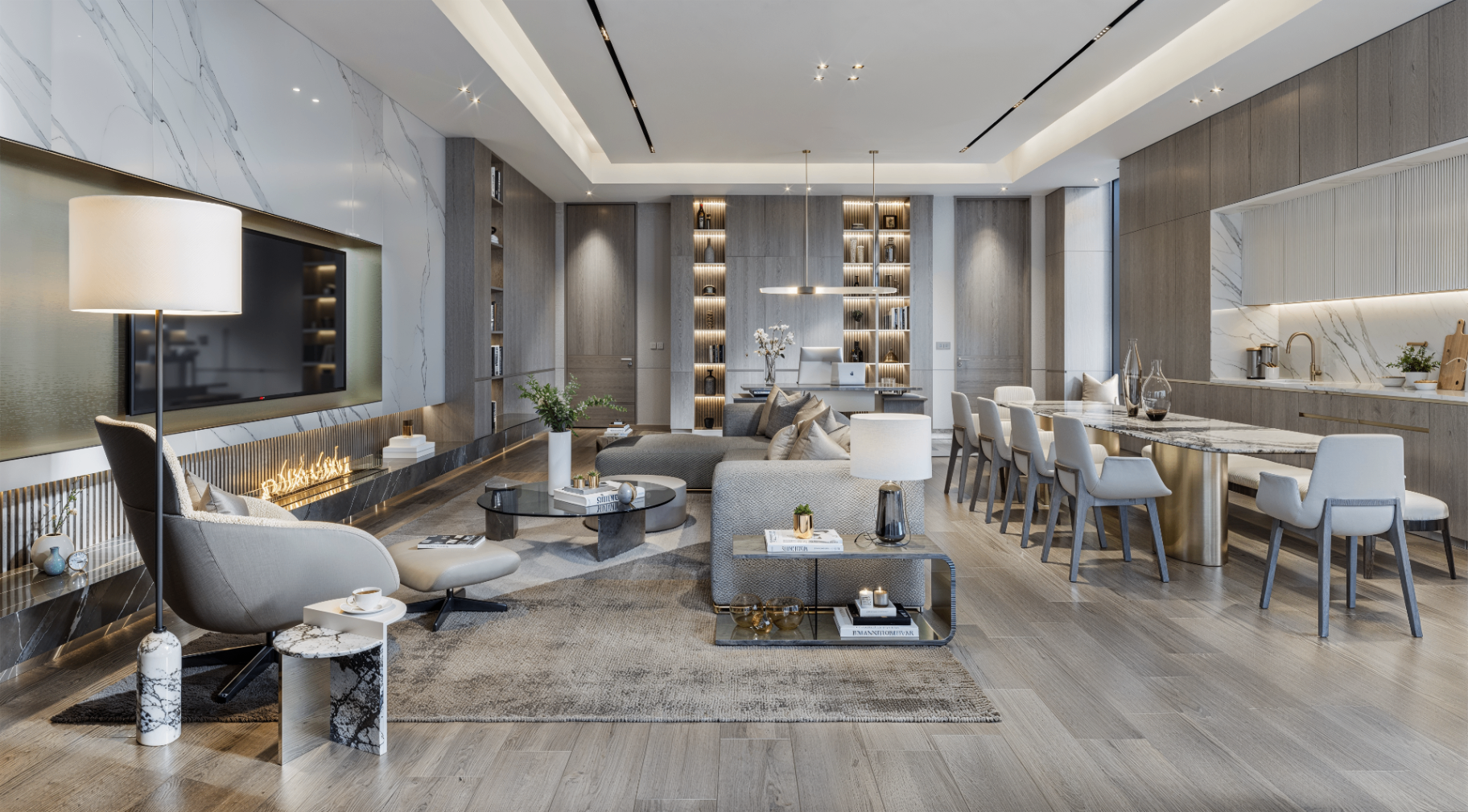
MWM Residence — living-dining study showing material curation, daylight control, and furniture layering for a high-end residential interior.
Every interior design magazine carries a point of view. Some document finished projects with the authority of an industry record; others forecast the mood boards that will shape the next season of residential and hospitality design. For a CGI studio working with architects, yacht designers, and interior designers, these publications are more than inspiration — they are a shared visual language we use to align a render with the sensibility a client wants to project.
The list below is organised by how each title is used in a luxury workflow. Some are for client presentations, some for trend research, and some for understanding the editorial standards that separate a good interior photograph — or render — from a great one.
The Global Benchmarks
Architectural Digest
Architectural Digest remains the closest thing the industry has to a universal reference. Its interiors coverage spans historic estates, celebrity residences, and architect-driven new builds, all photographed with a consistent sense of scale and restraint. For a residential CGI project, AD is the benchmark for how a space should feel when the camera pulls back: confident, layered, and never over-styled.
Elle Decor
Elle Decor sits at the intersection of fashion and interiors. Its pages favour lighter, more accessible luxury — soft neutrals, sculptural furniture, and rooms that read as lived-in rather than staged. When a client asks for a render that feels "younger" or "more editorial," Elle Decor is usually the reference point.
Wallpaper*
Wallpaper* treats interior design as part of a wider design culture that includes architecture, product design, and art. Its photography is graphic and precise, and its editorial voice assumes the reader is fluent in contemporary design. For avant-garde residential or hospitality concepts, Wallpaper* sets the tone.
The Industry Bibles
Interior Design
Interior Design is the trade publication that working designers read to see who is specifying what. Its project coverage is technically detailed and commercially aware — exactly the audience a hospitality or corporate residential render needs to convince. If the brief is a hotel lobby, a members' club, or a branded residence, this is the title to study.
Dezeen
Dezeen is digital-first and global in reach. Its interior stories move fast and favour conceptual clarity over polished styling. For early-stage concept renders and competition entries, Dezeen helps us understand how a project will be read by the architecture press before a single finish is finalised.
Architizer
Architizer connects practice with product. Its project pages often tag materials, fixtures, and furniture by manufacturer, making it a useful bridge between a mood board and a specification list. For renders that need to be sign-off ready, Architizer reinforces the discipline of modelling from real samples.
Luxury Lifestyle & Interiors
The World of Interiors
The World of Interiors is the most visually literate of the traditional luxury titles. It celebrates patina, provenance, and the layered history of a room. For classical residential work — estates, restored palazzos, or heritage-driven new builds — its photography teaches how to render age without making a space feel tired.
Cabana
Cabana approaches interiors through textiles, colour, and craft. Its pages are saturated, pattern-rich, and deeply decorative. When a brief calls for bold fabric, hand-painted wallcovering, or collected furniture, Cabana is the reference for how to compose a room that feels curated rather than decorated.
Cereal
Cereal is quiet, minimalist, and obsessively considered. Its interiors are pared back, its photography is soft and natural, and its editorial pace forces the reader to slow down. For Scandinavian-influenced or Japanese-minimal residential projects, Cereal provides the visual grammar.
Regional Voices
Luxe Interiors + Design
Luxe is the definitive American luxury residential title. Its regional editions cover high-end homes from California to Florida, and its editorial style leans into spaciousness, bespoke millwork, and indoor-outdoor living. For US-facing residential renders, Luxe defines the expected level of finish.
Est Living
Est Living covers Australian and international design with a focus on material honesty and architectural integration. Its projects favour concrete, timber, and stone used with confidence, and its styling is restrained. For contemporary architecture-led interiors, Est Living is a reliable reference.
The Design Files
The Design Files began as a blog and has grown into one of the most influential Australian design platforms. Its tone is approachable, its projects are real homes, and its audience is design-curious homeowners as much as professionals. For renders aimed at the owner-occupier market, it helps us avoid over-corporate styling.
Digital-First Curators
Yellowtrace
Yellowtrace is a Sydney-based digital publication with a sharp eye for emerging talent and conceptual interiors. Its coverage moves faster than print and often surfaces projects before they appear elsewhere. For trend forecasting and colour-direction research, Yellowtrace is invaluable.
Sight Unseen
Sight Unseen champions independent designers and collectible design. Its interiors are art-forward and often unconventional. When a render needs to communicate personality, curation, or a collector's sensibility, Sight Unseen shows how to do it without descending into clutter.
Design Milk
Design Milk covers interiors alongside product and technology. Its audience is broad, but its project selection is clean and contemporary. For residential renders that need to feel current without being avant-garde, Design Milk offers a safe middle ground.
How We Use These Magazines in CGI
A reference image from a magazine is never copied; it is translated. When a client shares an Architectural Digest spread or a Cereal feature as a mood reference, we are looking for the underlying rules: the ratio of light to shadow, the height at which furniture is grouped, the way materials are allowed to age, and the negative space that lets a room breathe. Those rules are what we reconstruct in 3D.
The best interior design magazines also remind us that a render is a piece of editorial photography before it is a technical document. The camera angle, the styling props, the quality of light, and the crop all communicate intent. A technically perfect render with no editorial point of view will underperform against a slightly looser image that knows what story it is telling.
How to Get Your Project Featured
Most of these magazines accept project submissions directly or through a publicist. The common requirement is strong photography — and increasingly, strong CGI. A project that is still under construction can be published if the renders are photorealistic enough to stand alongside photographed work. Editors look for a clear design story, a named design team, and high-resolution images with full credits.
If your goal is press coverage, it is worth briefing the CGI team early. Editorial-style renders need different compositions from sales renders: more atmosphere, fewer hero angles, and a sense of the space in use rather than on display.
A Final Note on Curation
The best interior design magazines do not just show beautiful rooms; they show what a particular audience considers beautiful at a particular moment. For architects and interior designers, staying across these publications is part of the job. For a CGI studio, they are the brief translated into light, material, and composition.
See how we translate editorial references into photorealistic renders in the studio portfolio — or brief us on your next residential, hospitality, or yacht interior.