Brokerage Guide
3D Boat Rendering vs. Photography
A practical comparison for brokers, shipyards, and owners deciding between CGI and a traditional photo shoot for a sales listing. When does 3D boat rendering save time, money, and weather days — and when is a physical shoot still the right call?
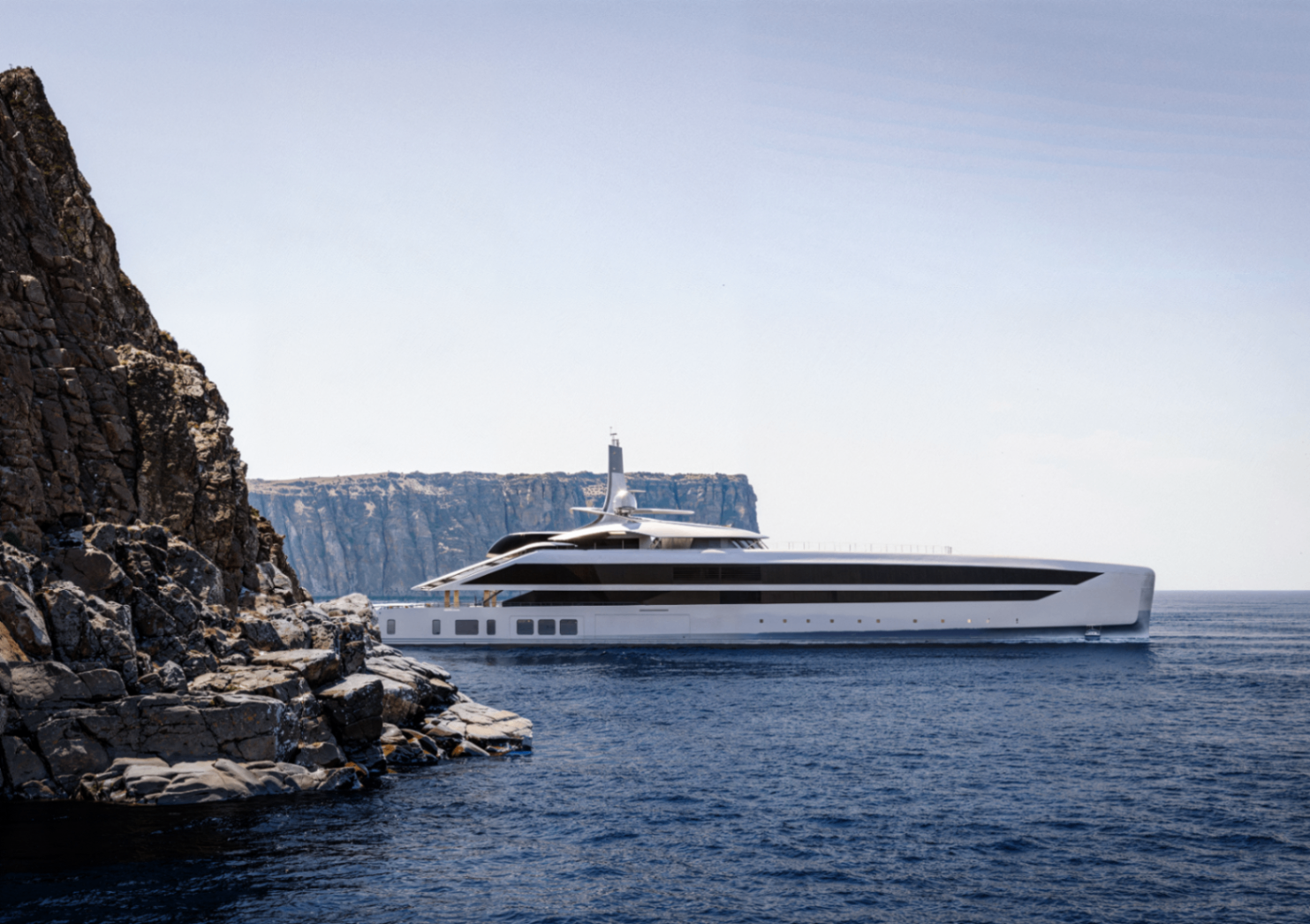
Arwen exterior study — a fully rendered coastal scene with controlled light, custom wake, and no production boat day.
Every yacht listing needs hero imagery. The question is no longer whether the pictures should exist, but how they should be made. For a 60-metre yacht still in build, a brokerage re-fit, or a vessel on the wrong side of the world, 3D boat rendering can deliver the same emotional impact as a professional marine shoot — sometimes faster, often cheaper, and always more flexible. This guide compares the two workflows so brokers and shipyards can choose the right tool for each listing.
The Physical Shoot: Real, But Costly
A professional yacht photo shoot sounds simple: fly the photographer and assistant to the boat, wait for weather, stage the interior, chase the golden hour, and capture the vessel in its element. In reality, the logistics multiply quickly. The yacht must be in the right place, fully crewed, fuelled, and provisioned. Helicopter or chase-boat support is often required for exterior hero shots. Interiors need flowers, linens, glassware, and a day of styling. A single change — a different hull colour, a new sun-deck layout, or an owner who wants evening mood instead of morning light — can mean a second production day.
The results are undeniably real. A camera sees actual reflections, real water interaction, and the lived-in texture of a finished interior. For a yacht that is already in the water, beautifully detailed, and located in a photogenic marina, photography is often the fastest path to authentic marketing material. The limitation is that the image can only show what already exists.
3D Boat Rendering: Control Without Compromise
A 3D boat render starts with the vessel itself: CAD from the shipyard, general arrangement drawings, material schedules, and reference photography of the real boat or sister ship. From that data we build a digital twin — hull, superstructure, interiors, decks, and surroundings — and light it as if it were on location. The difference is that every variable becomes a slider. Sun angle, sea state, sky mood, wake pattern, and camera position are all decisions made in post, not gambles made at 5 a.m. on the Mediterranean.
Material flexibility is where CGI separates from photography. A broker marketing a yacht under re-fit can show the new teak decking, the repainted hull, or the redesigned beach club before a single tradesman steps aboard. A shipyard can produce sales imagery for hull number three while hull number one is still in outfitting. Material swaps — from walnut to bleached oak, from navy hull to champagne metallic — take hours rather than weeks.
Lighting: The Biggest Advantage of CGI
Marine photography is a race against the sun. The golden window for exteriors is short; overcast interiors flatten detail; and mixed colour temperatures — daylight through saloon glass, tungsten in the galley, LED spots in the master — fight the camera sensor. A 3D boat render solves this by design. We place virtual lights with the same intention as a cinematographer, then render multiple passes so the final grade keeps every surface in its best light.
For exteriors, the HDRI sky can be a calm sunrise in the South of France or a dramatic late afternoon in the Norwegian fjords — without moving the boat. For interiors, we can keep the atmosphere consistent across a dozen hero shots even when the real yacht has not been styled. The result is a cohesive visual story that would require multiple shoot days and perfect conditions to match on camera.
Cost and Timeline: A Side-by-Side Look
A traditional yacht photo shoot for a superyacht can run from tens of thousands to six figures when travel, crew, staging, helicopter, and weather delays are included. Delivery is tied to the shoot schedule, and re-shoots cost nearly as much as the original day. A 3D boat render project, by contrast, is priced by asset complexity and deliverable count. Once the digital twin exists, new angles, moods, and material options are derivatives, not full productions.
Timelines are also more predictable. A full exterior hero suite can be delivered in days rather than weeks, and interior sets can be produced before the real boat is even launched. For brokerage listings with a launch deadline or a shipyard wanting to pre-sell the next hull, that predictability is a commercial advantage.
When Photography Still Wins
There are cases where a camera is still the better choice. A brokerage listing for a finished, in-water yacht in a desirable location benefits from the authenticity of real sea and real light. Lifestyle photography with real guests, real crew, and real water texture can communicate emotion in ways that pure CGI sometimes cannot. And for editorial or owner portraits, a photographer on deck will always outperform a render.
The strongest marketing strategies often combine both: renders for pre-launch, configuration options, and controlled hero imagery; photography for delivered yachts, events, and human moments. The two are not competitors — they are complementary tools in the same visual toolbox.
Decision Matrix for Brokers and Shipyards
If the yacht is still in build, under re-fit, or located far from ideal shooting conditions, 3D boat rendering is usually the faster and more flexible path. If the yacht is finished, in the water, and the story depends on real-world atmosphere, photography is hard to beat. If the goal is to show multiple configurations, finishes, or seasonal moods from a single asset, CGI is the only practical choice.
The real value of a comparison guide is not to declare a winner, but to make the decision visible. At Mosh Design, we produce both renders and pre-shoot planning imagery, and we often use CGI to de-risk the physical shoot itself — deciding angles, lighting, and staging before the production boat day begins.
Why This Matters for Listings
A brokerage listing lives or dies on the quality of its first impression. In a market where buyers scroll through dozens of yachts before requesting a viewing, the hero image has to stop the thumb. 3D boat rendering gives brokers and shipyards the ability to create that image on demand — without waiting for weather, crew, or the completion of a refit. It turns visualization from a post-build luxury into a pre-sales tool.
See the full yacht rendering service for deliverables, typical timelines, and how a 3D boat render project moves from first drawings to final hero frames.