Marketing Guide
Yacht Animation Marketing
A shipyard's playbook for cinematic yacht animation — how motion sells design flow, shortens the sales cycle, and gives broker teams footage that actually closes.
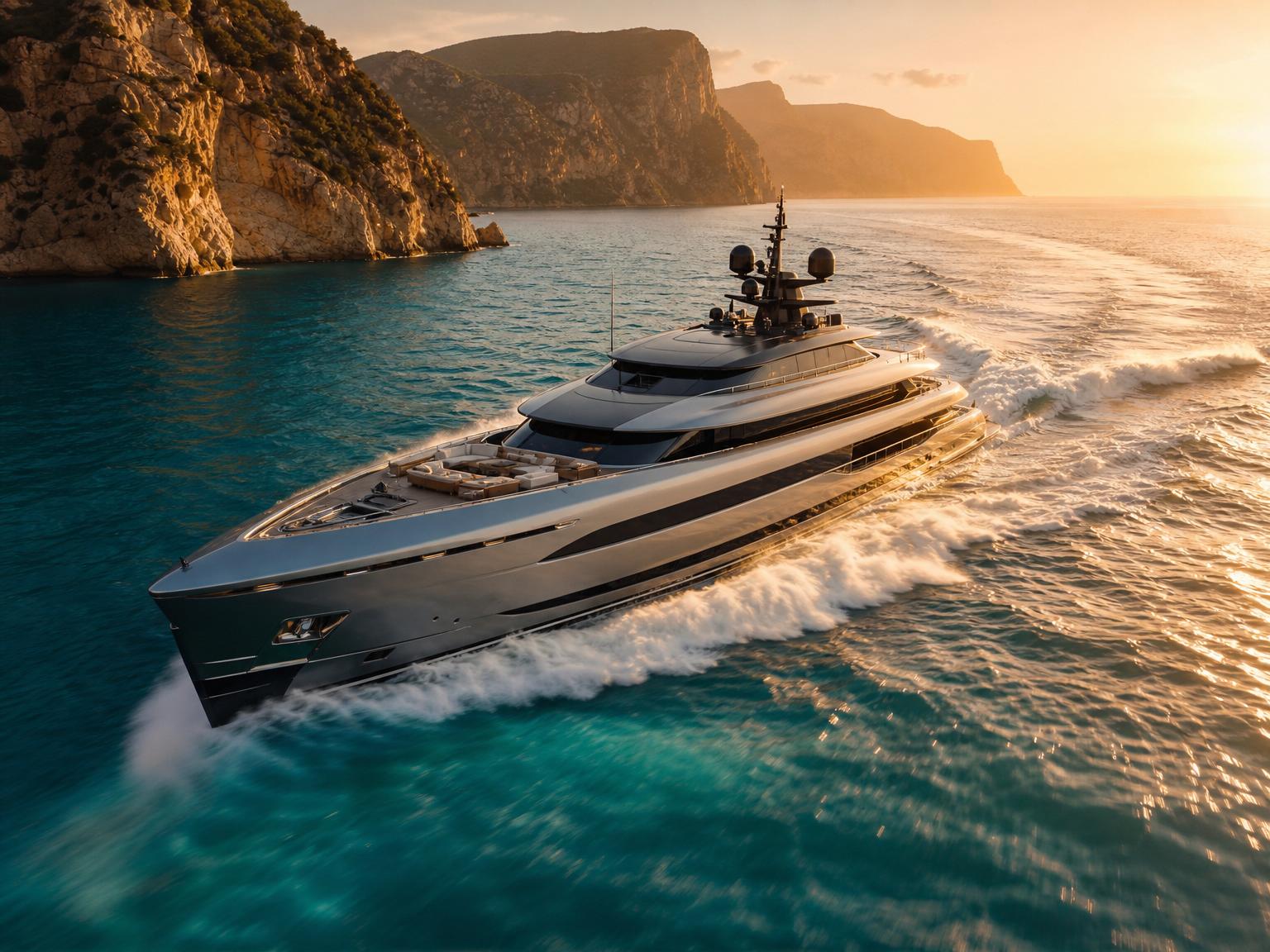
The first three seconds of a yacht film decide whether the buyer leans in or scrolls past.
A yacht is not sold on specifications. It is sold on a feeling — a two-minute idea in the buyer's head about a Mediterranean morning, a specific beam-on breeze, a particular way the light lands on brushed teak. Still renders can point at that feeling. Cinematic yacht animation walks the buyer directly into it. This guide is for shipyards, brokers, and marketing teams treating animation not as a promotional accessory but as a sales instrument — and building the shot list accordingly.
Why Motion Closes Buyers
A superyacht buyer is rarely shopping for a hull. They are shopping for a way of moving through water, a way of receiving guests, a way of arriving. Stills can describe the boat; only animation can describe the arrival. When a camera walks the buyer from tender garage to sundeck in a single unbroken move, the sale stops being about lengths and displacements and becomes about a life that already exists on screen. That shift — from spec-sheet to lifestyle — is where deposits are placed.
The commercial value is measurable. Broker teams working with cinematic yacht films consistently report shorter qualification cycles: buyers arrive at the sea-trial already convinced of the design intent, and the meeting turns into commissioning conversation rather than persuasion. A film is not marketing collateral in that context. It is the sales conversation, run once, at scale.
Selling Design Flow, Not Design Features
The temptation with a new build is to list. Feature the helipad, feature the beach club, feature the owner's suite. That is a brochure structure, and it does not survive an animated edit. What survives is flow — the way the beach club opens onto the swim platform, the way the sundeck is one continuous surface with the aft dining, the way the owner's suite steps out onto a private lounge without ever crossing crew paths. Animation is uniquely able to show flow because flow only exists in time.
We storyboard around three or four flow moments per film — never a checklist. Each is designed to answer a question a buyer would ask on tour: how does breakfast happen, where do the children go after the beach, what does an evening with guests look like from the moment the tender ties up. When the animation answers those questions before they are asked, the broker meeting starts three steps closer to signature.
The Boat-Show Cut
Monaco, Fort Lauderdale, Cannes — every serious yacht marketing calendar rotates around a small number of shows, and the plinth loop is the single most-viewed piece of content the shipyard will produce that year. It plays silent, on repeat, to buyers who have already seen twenty other yards that morning. The cut has to work at any entry point, land its signature moment inside fifteen seconds, and never rely on sound design.
We treat the boat-show cut as its own commission, not a trim of the launch film. Grade is quieter — brochure blues rather than trailer contrast. Cameras are longer and slower — a booth audience is standing, not seated. The signature moment lands twice per loop, once at 0:15 and once at 0:45, so a buyer who arrives mid-cycle still catches the film's point of view before walking on.
Broker & Owner Deliverables
A single hero film underserves the sales chain. Brokers need a landscape edit for private previews, a vertical cut for direct-message pitches, and a set of stills pulled from the animation for the memo that follows the first meeting. Owners increasingly ask for a personal cut — the same footage regraded and rescored for use in their own network, without shipyard branding. Every one of those masters is a separate commercial artefact, and the animation package has to be architected so they can be produced without re-rendering.
That means shooting the animation with a wider negative than any single deliverable requires — an over-scan of camera, a longer master timeline, isolated render elements for glass, water, and sky. When the broker calls at Monaco Wednesday asking for a fifteen-second vertical by Thursday morning, the answer is a one-day edit, not a two-week resource fight.
Distribution & Timing
A yacht film's commercial life is short and predictable. The launch trailer earns its keep in the six weeks around delivery announcement and the show that follows. The plinth loop earns its keep across a single show cycle. Broker cuts earn their keep for as long as the vessel is available for sale or charter. Planning the animation on that calendar — rather than producing one film and re-purposing it forever — is what separates shipyard marketing that compounds from marketing that decays.
Cinematic yacht animation is not a video project. It is the sales conversation, filmed once, tuned for every surface a buyer might see it on. Built that way, it stops being an expense on the marketing line and starts paying for itself the first time a broker sends it and the buyer replies with a question about delivery dates.
Shipyards and brokerage teams can review our yacht CGI and animation capabilities or discuss a launch campaign around an existing design programme.